
Beyond Carbs & Insulin: The Gut Factor in T1D Glucose Control.
D-Coding the article : Postprandial Glucose Control in Type 1 Diabetes: Importance of the Gastric Emptying Rate.
Published Date:
10 July, 2019
Published By:
Roberta Lupoli, Federica Pisano, and Brunella Capaldo
Approved By:
To be

Decoded By:
Divina Chandiramani
5 mins to read
- The T1D Takeaway
- You can be doing everything right, counting carbs, using the latest insulin, following your treatment plan, and still struggle with blood sugar spikes after meals. This research suggests that for many people with T1D, a slower-than-normal stomach might be part of the reason why. And until that factor gets factored into care, the puzzle is missing a piece.
Summary Snap
Shots
A research team from Italy reviewed the science behind why blood sugar spikes after meals are hard to control in people with Type 1 diabetes. Their focus: the rate at which food leaves the stomach. They found that up to half of T1D patients have a stomach that empties more slowly than normal, and that this delay throws off the timing between insulin and glucose absorption. The mismatch creates a predictable pattern of blood sugar instability that current treatment strategies don’t fully account for.
• Up to 40-50% of people with T1D have delayed gastric emptying, many without any obvious symptoms
• Delayed gastric emptying shifts the timing of blood sugar peaks, creating a mismatch with insulin action
• Meal composition (fat, protein, fiber, carbohydrate type) also significantly shapes the blood sugar curve after eating
• Factoring in stomach emptying speed when calculating insulin doses could be a meaningful step forward in T1D care
Prime Insight
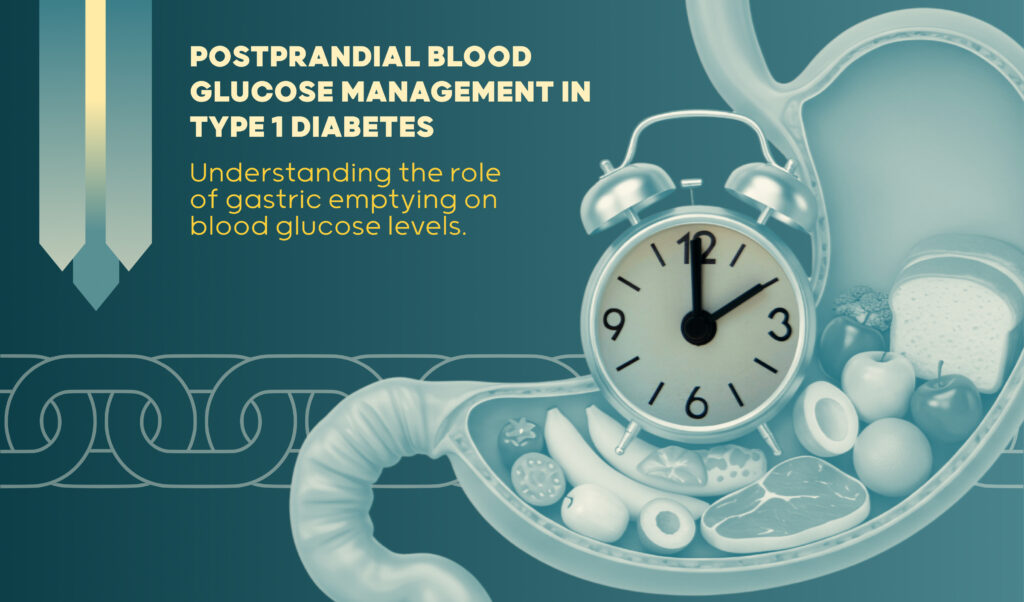
Managing blood sugar after meals is one of the challenges in Type 1 diabetes care. Even with modern insulin and continuous glucose monitoring technology, post-meal spikes remain difficult to control. Researchers wanted to map out why gastric emptying rate matters and what to do about it.
This was a review article. The authors analyzed existing research rather than recruiting new participants. Studies they drew from included people with T1D across a range of ages and diabetes durations, including young patients without any signs of chronic complications.
“Up to half of people with Type 1 diabetes have a stomach that empties more slowly than normal, and most of them have no idea.”
The authors reviewed published clinical studies on gastric emptying in T1D, examining how GE rate interacts with meal composition, insulin timing, and blood sugar patterns. They also discussed the C-octanoate breath test, a non-invasive and accurate way to measure how quickly the stomach empties.
Around 40-50% of T1D patients have delayed gastric emptying, including young patients with no signs of other complications. Delayed GE doesn’t necessarily change how high blood sugar peaks, but it shifts when that peak happens, often pushing it about 27 minutes later than expected. That gap is enough to create a mismatch between when insulin is working and when glucose arrives in the bloodstream. Meal composition adds another layer: high-fat, high-protein, high-fiber, and low glycemic index foods all slow gastric emptying further.
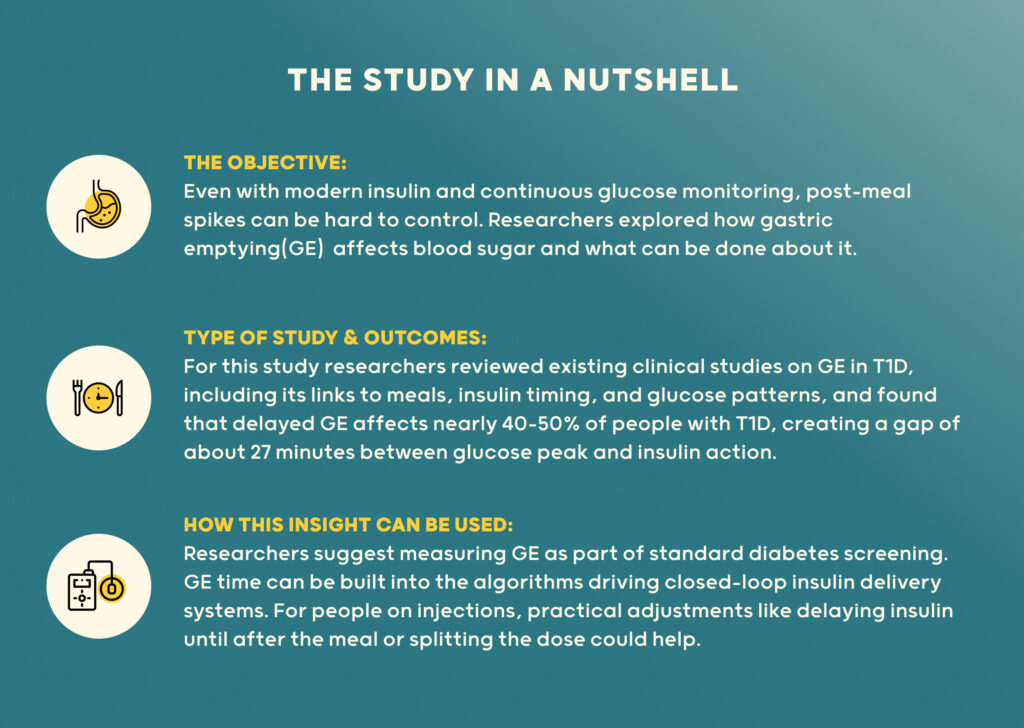
Gastric emptying is a clinically significant and underappreciated factor in post-meal blood sugar control for people with T1D. Even mild delays affect the shape of the blood sugar response. The authors argued that measuring gastric emptying time should become part of standard diabetes screening.
The authors proposed that gastric emptying time be built into the algorithms driving closed-loop insulin delivery systems. For people on injections, practical adjustments like delaying insulin until after the meal or splitting the dose could help. Dedicated clinical studies are needed to test these approaches.
- A Deeper Dive
- The Sources Voice
“Including GE time and meal composition in the algorithms for insulin bolus calculation of the insulin delivery systems could be an important step forward for optimization of PP glucose control in T1DM.”
- Curiosities Clarified
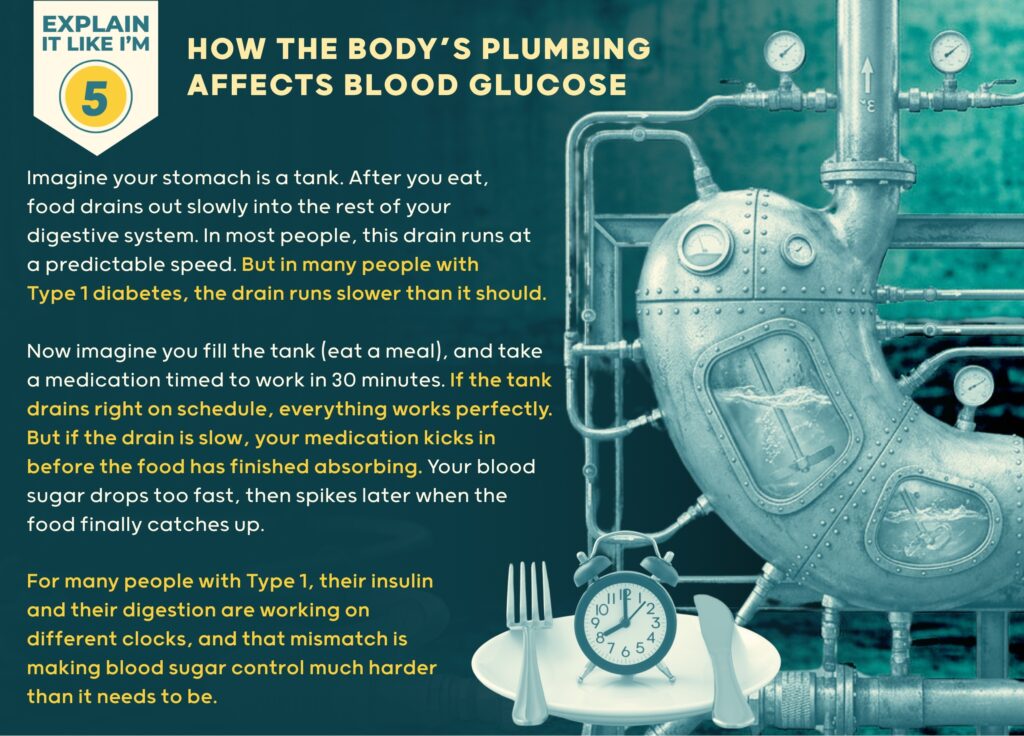
Carb counting tells you how much glucose is coming. Gastric emptying tells you when it’s arriving. If your stomach releases carbs into your bloodstream later than expected, your insulin will peak before your blood sugar does. That mismatch can cause a low, followed by a high.
Current technology tracks glucose and delivers insulin, but it doesn’t yet account for how fast food is leaving the stomach. Without that variable, even the most advanced closed-loop system is working with incomplete information.
Significantly. Fat, protein, fiber, and low glycemic index foods all slow gastric emptying. That’s why the same insulin dose can work for a simple carb-heavy meal and then completely miss for a high-fat, high-protein plate.
Not always. Some people experience nausea or feeling full quickly after eating. But many have no symptoms at all. The research found that even young T1D patients without other complications could have delayed gastric emptying, making routine screening important.