
Carbs act fast. Protein acts later. Knowing the difference can change how you plan meals, insulin, and stability.
D-Coding the article : The Glycemic Impact of Protein Ingestion in People With Type 1 Diabetes
Published Date:
February 14, 2025
Published By:
Giang M. Dao; Greg M. Kowalski ; Clinton R. Bruce ; David N. O’Neal Carmel E. Smart ; Dessi P. Zaharieva ; Declan T. Hennessy; Sam Zhao; Dale J. Morrison
Approved By:
To be

Decoded By:
Divina Chandiramani
5 mins to read
- The T1D Takeaway
- Don’t just count carbs, think of the protein you eat too. Protein doesn’t spike blood sugar the way carbs do, but it’s also not “free.” When you eat protein, your body breaks it into tiny pieces that quietly signal your liver to release sugar. Because people with T1D don’t have their own insulin to handle this slow release, blood sugar can rise late sometimes hours after the meal is over. Plan your insulin and snack strategy with this in mind so you avoid surprise highs (and you might even use it to avoid lows).
Word Wizard
Protein doesn’t act the same as carbs, but it still affects blood sugar in people with T1D. When protein breaks down, the tiny pieces (amino acids) signal the liver to release sugar. Without your own insulin to balance that, your blood sugar can go up slowly and hang around longer than you expect. The rise is gentle and delayed, which is why it’s easy to miss if you’re only focused on carbs. Bigger portions of protein, or things like whey shakes, can make that effect stronger, while mixed meals might push the rise even later.
Understanding this can help explain those “mystery highs” that show up hours after eating. And sometimes, this slow rise can work in your favor, like before bed or after exercise when you want to avoid going low. Protein isn’t something to worry about; it’s simply something to pay attention to so you can predict your patterns a little better.
Summary Snap
Shots
- Protein can cause a delayed and prolonged rise in blood glucose in people with type 1 diabetes (T1D).
- This happens because amino acids from protein stimulate glucagon, which tells the liver to release glucose.
- Unlike people without diabetes, individuals with T1D lack the insulin response needed to counter this effect.
- Larger protein doses and fast-absorbing proteins (like whey) can raise glucose more.
- This delayed glucose rise can create unexpected highs, but can also help prevent overnight or post-exercise lows.
Prime Insight
Protein doesn’t raise blood glucose the same way carbohydrates do, but it still has a meaningful impact for people with type 1 diabetes. When protein is digested, the body breaks it down into amino acids. These amino acids send signals to the liver that gradually prompt it to release glucose. In individuals without diabetes, the pancreas automatically releases insulin to counter this slow glucose release. But in type 1 diabetes, that natural insulin response is absent, which means the rise in glucose can occur later and continue for several hours.
This protein-driven rise is typically:
- Delayed: often beginning 1–3 hours after eating
- Gradual: more of a steady climb than a sharp spike
- Prolonged: the effect can last for several hours
Not all rises are immediate. Protein creates a second wave of glucose that shows up long after carbs are gone.
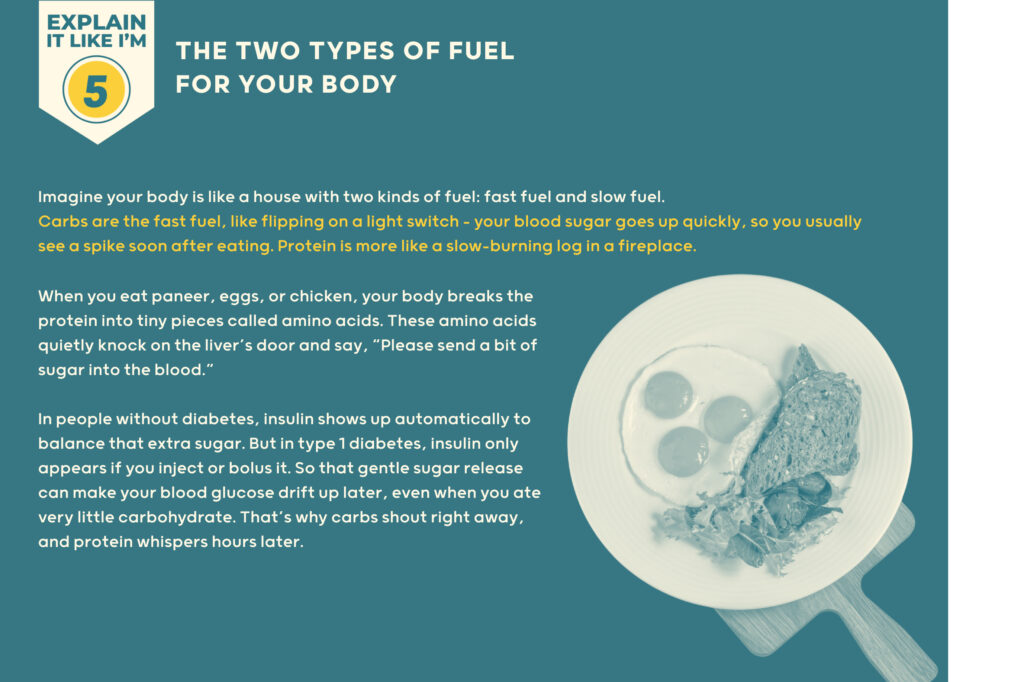
This explains why someone might see a blood glucose increase after a “low-carb” or “carb-free” meal. It’s not unpredictable, it’s the body converting some of that protein into glucose over time.
Different types and amounts of protein influence this effect:
- Fast-digesting proteins (like whey shakes) can lead to an earlier rise.
- Meals with protein plus fat or fiber may delay the rise even further.
- Larger protein portions generally lead to a more noticeable glucose increase.
Traditional insulin-dosing strategies tend to focus almost exclusively on carbohydrates. This study highlights the need to consider protein as well. If insulin is dosed based only on carb intake, the later “second wave” of glucose from protein may be missed, leading to unexpected or unexplained hyperglycemia hours after eating.
At the same time, this delayed glucose response isn’t always a drawback. The slow, steady release of glucose from protein can be useful in certain situations, such as before bedtime or after physical activity, when a gradual rise can help prevent hypoglycemia.
- A Deeper Dive
- The Sources Voice
“There is a clear rationale and emerging evidence for using protein ingestion as a tool to prevent overnight or exercise-induced hypoglycemia in people with type 1 diabetes” – Giang M et al.
- Curiosities Clarified
No. Protein doesn’t act fast like carbs. It can make blood sugar rise later, because the body slowly turns some of it into signals that tell the liver to release sugar over time.
No. Fast-absorbing proteins like whey may cause quicker rises, while mixed meals or slower proteins delay the effect.
Yes. It slow glucose-releasing effect can provide a gentle upward drift, useful before bed or after exercise