
How Technology Is Changing Type 1 Diabetes.
D-Coding the article : Current Technologies for Managing Type 1 Diabetes Mellitus and Their Impact on Quality of Life-A Narrative Review.
Published Date:
July 30, 2023
Published By:
Viviana Elian, Violeta Popovici, Emma-Adriana Ozon, Adina Magdalena Musuc, Ancuța Cătălina Fița, Emilia Rusu, Gabriela Radulian, Dumitru Lupuliasa
Approved By:
To be

Decoded By:
Divina Chandiramani
5 mins to read
- The T1D Takeaway
- Living with T1D is a round the clock responsibility. Every meal, every workout, every demanding school or work day can shift blood sugar levels and keeping those levels steady is essential for long-term wellbeing.
- The encouraging reality? Technology is rising to the challenge in many great ways. This review spotlights how Continuous Glucose Monitors (CGMs), insulin pumps, and hybrid closed-loop systems are transforming how people manage T1D. These are not distant, futuristic concepts many are already in people's hands, on their arms, and integrated into their daily routines.
- What makes this article stand out for the T1D community is its focus on quality of life, not just blood sugar numbers. Managing T1D is not a clinical challenge only, it is a lived, human experience. This review asks a powerful question: do these technologies genuinely make life fuller and freer? The answer, for the most part, is yes! (with meaningful room still ahead for growth.)
Summary Snap
Shots
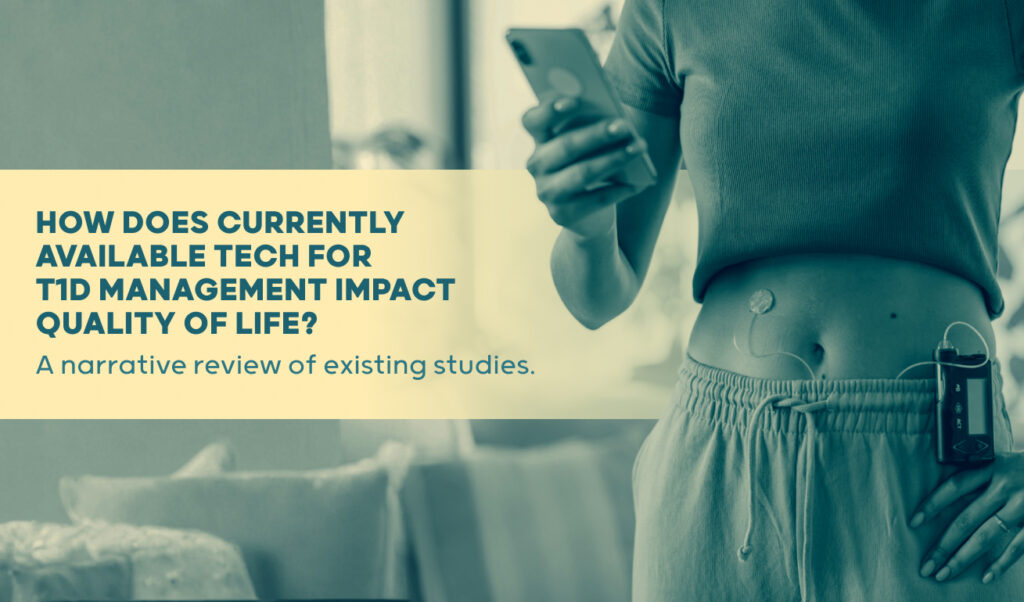
This review takes a wide-angle look at the landscape of technology available to people living with Type 1 Diabetes and explores a straightforward but powerful question: how much do these tools actually enrich quality of life?
The researchers examined a broad spectrum of current devices and digital solutions — from CGMs paired with insulin injections, all the way to fully automated closed-loop systems. A clear pattern emerged: the more a technology reduces the manual burden of blood sugar management, the more it tends to elevate quality of life, particularly in areas like sleep, emotional wellbeing, and the freedom to participate fully in everyday activities.
CGMs deliver real-time data that removes the constant guesswork. Insulin pumps offer a level of flexibility that multiple daily injections simply cannot match. And closed-loop systems, where the CGM and pump communicate directly and continuously, come closest to replicating what a well-functioning pancreas does naturally.
The review also underscores that technology is only part of the picture. Education, strong healthcare support, and equitable access to devices all play defining roles in whether a person can truly benefit from these advances. The science is accelerating fast, ensuring it reaches everyone who needs it is the essential next step.
The review concludes that diabetes technology is no longer simply about improving HbA1c—it is increasingly about improving safety, reducing daily burden, increasing confidence, and helping people with Type 1 Diabetes live fuller lives with less mental and emotional strain.
Prime Insight
Living with Type 1 Diabetes (T1D) requires constant attention. People must monitor their blood sugar, calculate insulin doses, think about food, exercise, illness, stress, and many other factors every day. This review explores how modern diabetes technologies are helping make that task easier and improving quality of life.
The authors reviewed studies on Continuous Glucose Monitors (CGMs), insulin pumps, Automated Insulin Delivery (AID) systems, sometimes called “artificial pancreas” systems, and smartphone applications used in diabetes care.
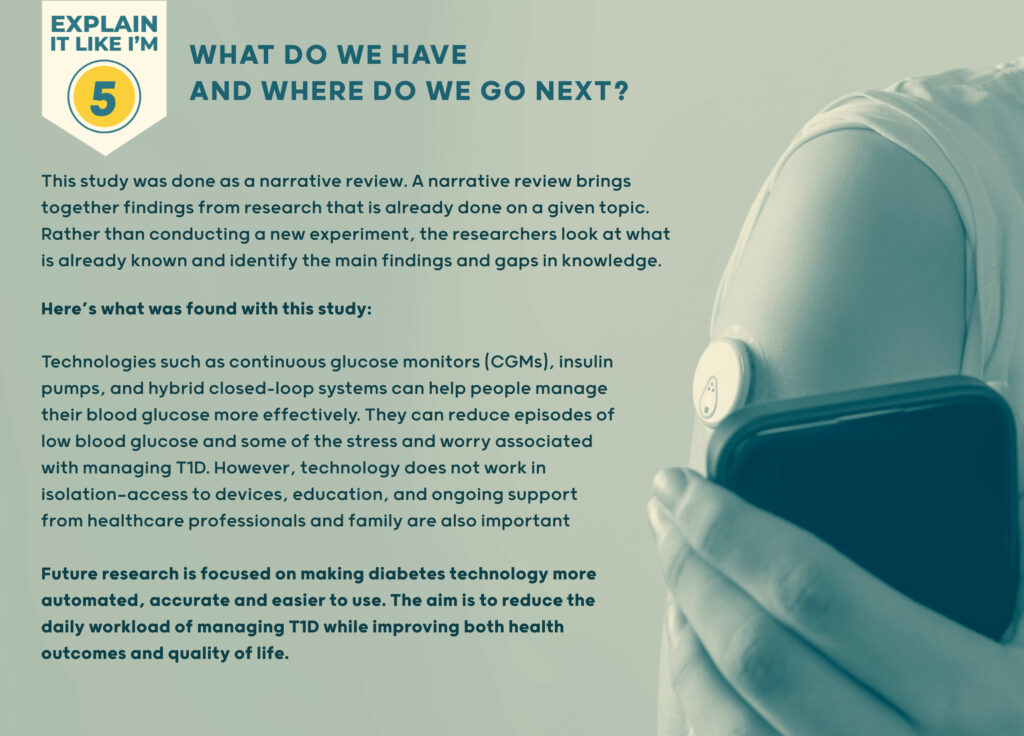
One of the biggest advances has been the development of CGMs. Unlike traditional finger-prick testing, CGMs provide glucose readings throughout the day and night. This helps people spot patterns, respond more quickly to highs and lows, and spend more time in their target glucose range.
A Sensor the Size of a Coin. A Change That Is Monumental.
A CGM, a small, coin-sized sensor worn on the skin, checks blood sugar levels every few minutes, sending live data straight to a phone or device, no finger pricks required. That single shift, from manual testing to continuous real-time monitoring, has been shown to be one of the most impactful advances in T1D management in decades.
Smartphone apps are becoming valuable companions to diabetes devices. They help people track food, insulin, exercise, and glucose trends in one place, making it easier to understand how daily choices affect blood sugar levels.
However, the authors emphasize that access remains a major challenge. Many people cannot obtain these technologies because of cost, limited insurance coverage, lack of training, or limited access to diabetes education. Technology alone is not enough; people also need support and education to use it effectively.
Overall, the review concludes that modern diabetes technologies are helping people live safer, healthier, and more confident lives. The next challenge is ensuring that these life-changing tools become available and affordable for everyone who could benefit from them.
Sleep Is No Longer the Scariest Part
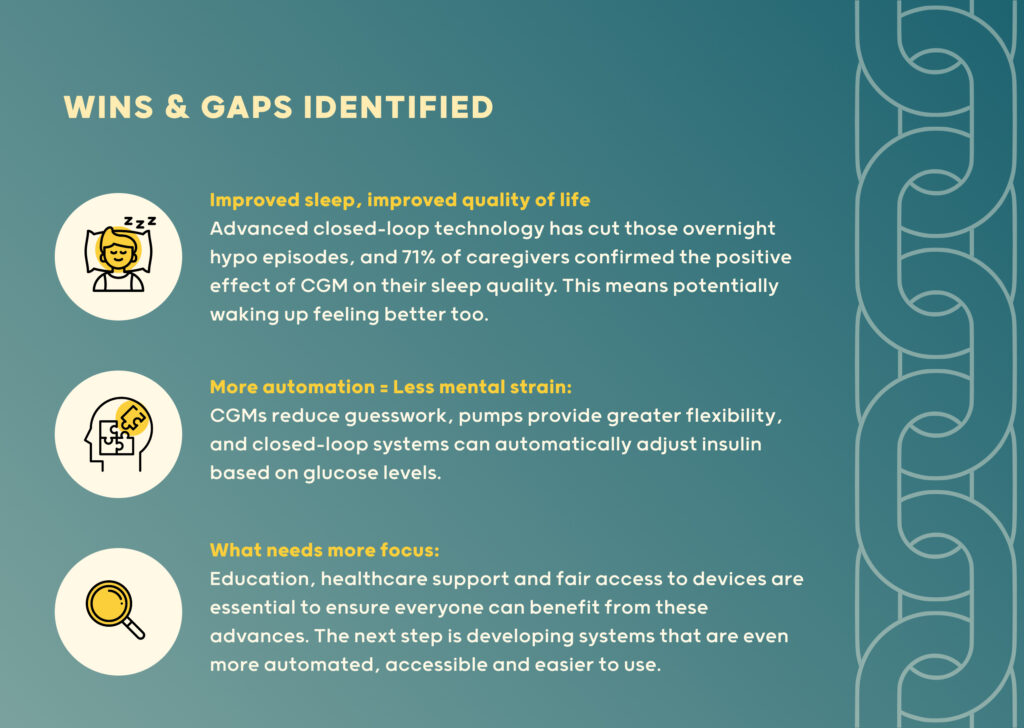
Nighttime used to be the most vulnerable window for people with T1D — blood sugar could drop low while the world was asleep. Advanced closed-loop technology has cut those overnight episodes, and 71% of caregivers confirmed the positive effect of CGM on their sleep quality.
Finally, The Vital Points of this study are:
- CGMs have been shown to meaningfully improve blood sugar control. People using them consistently spend significantly more time within their target glucose range.
- Nighttime presents one of the most challenging windows. Blood sugar drops during sleep are a major concern for people with T1D and their families. Closed-loop systems have demonstrated a good reduction in these overnight fluctuations.
- Mental load is a genuine factor. Managing T1D involves hundreds of micro-decisions every single day. Technologies that automate even a portion of these decisions directly reduce cognitive fatigue and emotional stress.
- Not all technology delivers equally. While closed-loop systems show the strongest outcomes, cost, access, and tech literacy remain substantial barriers; particularly for younger users and those in lower-income settings.
- App-based tools that track food, activity, and insulin patterns are increasingly paired with physical devices, offering people a more complete, connected view of what influences their blood sugar throughout the day.
- Modern diabetes technologies such as CGMs and automated insulin delivery systems help people with Type 1 Diabetes achieve better glucose control while reducing the risk of highs and lows, especially overnight.
- Beyond glucose numbers, these technologies reduce the daily mental burden of diabetes by automating many decisions and providing greater confidence, safety, and peace of mind.
- However, the benefits of diabetes technology depend not only on access to devices but also on education, support, affordability, and the ability to use the technology effectively.
- A Deeper Dive
- A landmark clinical trial testing a fully automated closed-loop system across multiple age groups, with significant findings on time-in-range improvements and reduced hypoglycemia
- This paper zooms in on the psychological dimension of T1D technology, exploring how CGMs and pumps influence mental health, family relationships, and school life for young people with T1D.
- The Sources Voice
“The use of CGM by individuals with diabetes is correlated with psychological benefits and burdens”
“T1DM management includes complex and precise self-care measures during a person’s entire life. This continuous process could overwhelm them, making them angry, anxious, frustrated, and/or discouraged “
- Curiosities Clarified
Yes, but lesser. Even the most advanced closed-loop systems still need the user to flag meals, because eating triggers fast shifts in blood sugar that the algorithm needs advance notice on. But the continuous background monitoring and automatic adjustments mean people are no longer doing mental calculations all day. Think of it like cruise control, you still need to steer, but the speed takes care of itself.
Most modern CGMs are inserted using a small applicator that places a thin filament ( not a needle) just beneath the skin. Many people describe the insertion as a brief, mild sensation, comparable to a light pinch. Once in place, it is generally not felt at all. Most CGMs are fully waterproof, meaning users can shower, swim, exercise, and sleep without any adjustments. The goal is for monitoring to become as seamless and invisible as possible.
Yes!! This is a central focus of ongoing research. Many of the studies reviewed in this paper included pediatric and adolescent groups, since T1D is frequently identified during childhood and the teenage years. Closed-loop systems have actually produced some positive results in younger age groups, where blood sugar can be especially variable due to growth, hormones, activity levels, and stress. Significantly, these systems also reduce anxiety for parents, who no longer need to set alarms throughout the night to monitor their child’s glucose levels.
7 Comments
I’ve been looking for a reliable spot to play and this one really delivers. The interface is smooth and the payouts are quick. Definitely check out joya9combdlogin if you want a hassle-free experience.
I’ve been looking for a reliable spot to play and this one really delivers. The interface is smooth and the payouts are quick. Definitely check out joya9combdlogin if you want a hassle-free experience.
The graphics are stunning and the gameplay is super immersive. It feels like a real casino from my living room. Love 7spinscasino.
The graphics are stunning and the gameplay is super immersive. It feels like a real casino from my living room. Love 7spinscasino.
Fast deposits and even faster withdrawals. That is all I care about and this site delivers perfectly. Big thanks to phj8jili.
Fast deposits and even faster withdrawals. That is all I care about and this site delivers perfectly. Big thanks to phj8jili.
nJhMyWRNJOneMcrxYUBkLLZF