
Bluetooth, Blood Sugars, and Safety: Why Smartphones Matter in Modern Type 1 Diabetes Care
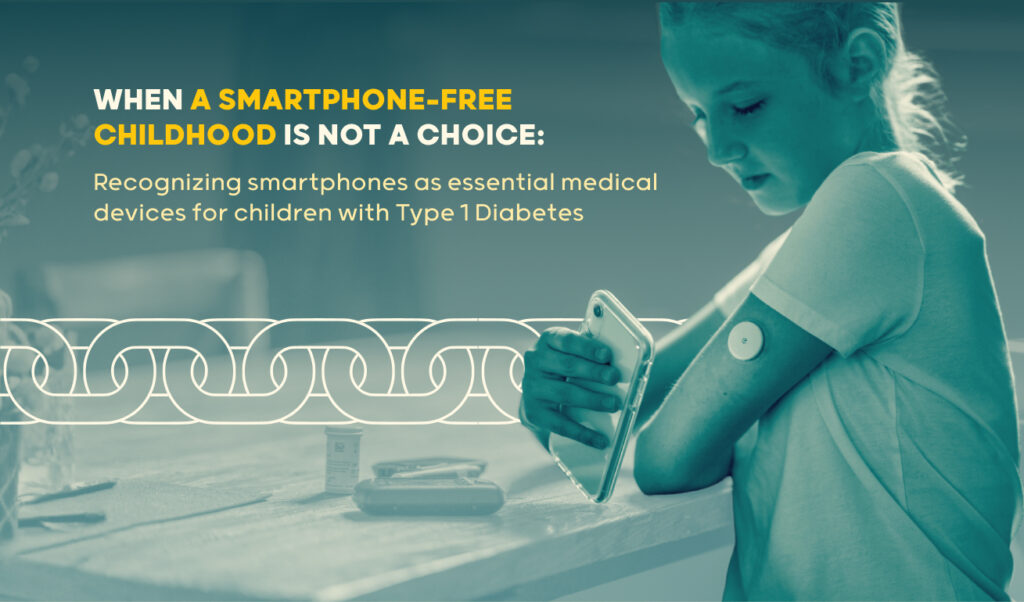
D-Coding the article : When a smartphone-free childhood is not a choice: Recognizing smartphones as essential medical devices
Published Date:
4 July, 2026
Published By:
Alice M. Gregory & Partha Kar
Approved By:
Dr. Partha Kar

Decoded By:
Asra H. Ahmed
MBA, PGCE in Assessment Learning disability, Head of Education at The Diabesties Foundation.
5 mins to read
- The T1D Takeaway
- For many families living with Type 1 Diabetes, a smartphone is not a luxury or parenting shortcut — it is a lifeline connected to their child’s blood sugars.
- While a child is in class, at recess, traveling on a school bus, or sleeping during a field trip, parents may rely on CGM alerts and Bluetooth-connected devices to warn them about dangerous highs or lows before they become emergencies.
- Removing access to these devices without understanding their medical role can leave families disconnected from the very tools helping keep their child safe throughout the school day.
Summary Snap
Shots
The authors acknowledge concerns around smartphone use in children but emphasize that for some children with Type 1 Diabetes, restricting access to a smartphone may disrupt essential, potentially life-saving medical care rather than simply limit screen time.
Prime Insight
Negative messaging around smartphones may make children feel: embarrassed, guilty, “different,” or reluctant to use devices they medically need.This can affect mental health and diabetes safety.
The authors warn that some school smartphone policies may unintentionally place children with T1D at risk. Blood sugar levels change constantly and cannot safely be monitored only at fixed times. Children may urgently need to check glucose readings, respond to alarms, treat low blood sugars and monitor insulin delivery.
The article gives examples of potentially harmful school responses, such as, only check your phone at certain times, go to the office to use it.
Parents may rely heavily on smartphone-connected systems while their child is at school, sleeping, traveling, on transport, or away from home.
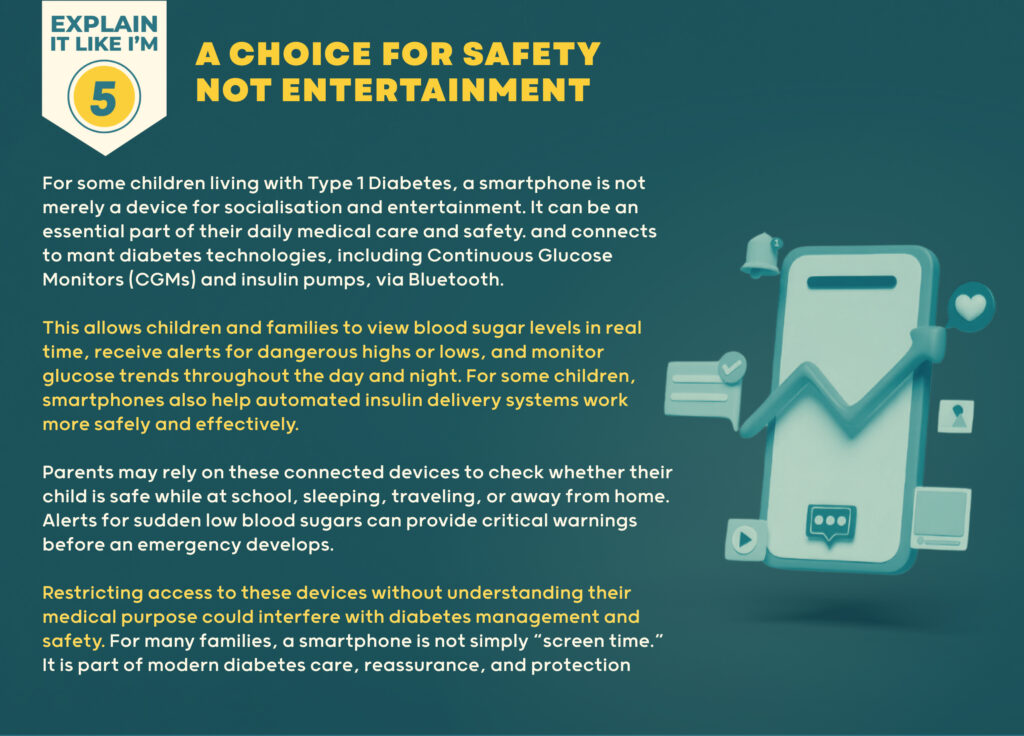
The article specifically highlights the importance of treat in the seat. Restricting smartphone access may lead to physical harm, missed glucose alerts, delayed treatment, and interference with diabetes management.
The article also discusses emotional and social consequences, including stigma, embarrassment, shame, feeling different, and reluctance to use medically necessary devices publicly.
Negative messaging around smartphones may make children feel guilty about using devices essential for their safety. This may affect mental health and confidence and willingness to respond to alarms or manage diabetes openly.
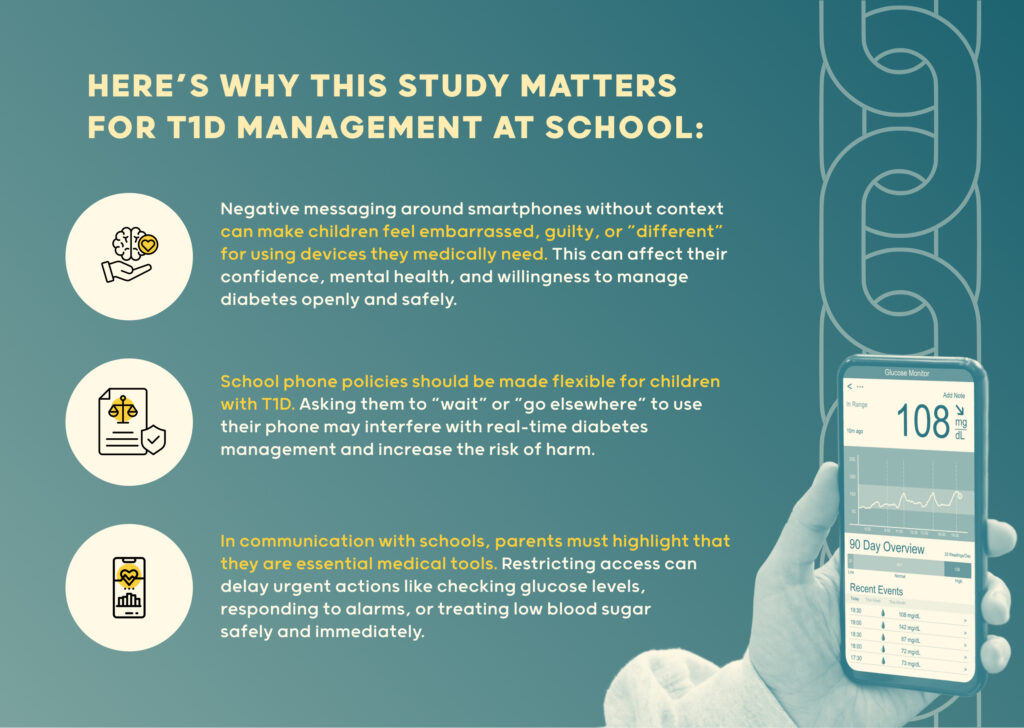
The authors conclude that children using smartphones as essential medical devices must be better considered in school policies, public discussions and future research.
The article calls for greater advocacy, improved awareness, clearer school exemptions, and better implementation of policies. The authors stress that policies designed to reduce screen time should not unintentionally disadvantage or place children with
The article calls for greater advocacy, improved awareness, clearer school exemptions, and better implementation of policies.
The authors stress that policies designed to reduce screen time should not unintentionally disadvantage or place children with medical conditions such as Type 1 Diabetes at risk.
- A Deeper Dive
- To understand if current research actually show about whether smartphone restrictions or bans in schools improve children’s learning, wellbeing, behavior, and overall school experience?
- Do blanket phone bans unintentionally harm vulnerable children, flexibility and exemptions are necessary, schools should recognize that, for some young people, phones are essential support tools rather than distractions.
- The Sources Voice
Research and advocacy of this type is essential to put us in the best position to ensure that children, already living in challenging circumstances, do not get lost or disadvantaged in these societal discussions and changes happening right now.
- Curiosities Clarified
No. The article does not say children should use phones without boundaries. It says: medical use must be understood, policies must be smarter, and schools need proper education.
The authors acknowledge these risks too. In fact, they suggest children with chronic conditions may face more bullying and stigma, making thoughtful support even more important.
The authors state that research should examine “the consequences of smartphone use and restriction in children in general, but this is particularly urgent when smartphones constitute an essential medical device.
The authors warn about possible consequences including “physical harm,” “perceived stigma,” “shame,” “mental health difficulties,” and “health disparities.”
10 Comments
This place has the best variety of games I have seen in a long time. Every spin feels exciting. Give slotpiala88 a go
This place has the best variety of games I have seen in a long time. Every spin feels exciting. Give slotpiala88 a go
The VIP treatment here is legit. I feel like my loyalty is actually rewarded and the exclusive perks are awesome. Highly suggest phpslotviplogin for serious players.
The VIP treatment here is legit. I feel like my loyalty is actually rewarded and the exclusive perks are awesome. Highly suggest phpslotviplogin for serious players.
Top notch graphics and really engaging gameplay. It is honestly one of the best gaming experiences I have had in a long time. Big thanks to ck888game
Top notch graphics and really engaging gameplay. It is honestly one of the best gaming experiences I have had in a long time. Big thanks to ck888game
Great, I should certainly pronounce, impressed with your website. I had no trouble navigating through all the tabs as well as related information ended up being truly simple to do to access. I recently found what I hoped for before you know it in the least. Quite unusual. Is likely to appreciate it for those who add forums or something, site theme . a tones way for your client to communicate. Nice task.
0hzigo
KFjnfDqdnEhzTJDdrBpVGxh
izwzo7